The History of Coffee in Costa Rica
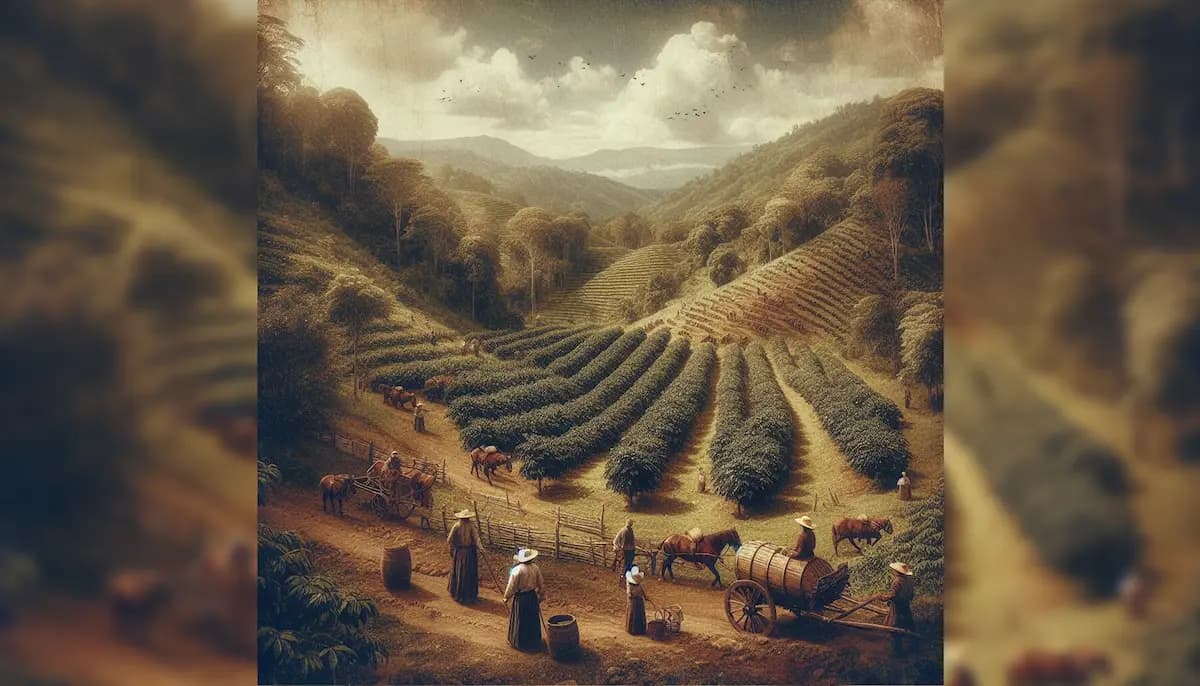
1720 is the likely date coffee arrived in the Americas, when the first seeds of Coffea arabica, Typica variety, reached the island of Martinique in the Antilles. They were later planted in the province of Costa Rica towards the end of the 18th century. At the time, our country lived on subsistence farming. Costa Rican history changed from 1808 onward: under Governor Tomás de Acosta, coffee growing took root in our soil and went on to reshape the lives and the work of Costa Ricans.
Coffee as an export
Several decades passed between the arrival of coffee and its consolidation as an export. During that period the Costa Rican authorities took a series of measures to encourage the industry. Among them: in 1821 the Municipality of San José handed out free coffee plants to residents; in 1825 the Government exempted coffee from the tithe; and in 1831 the National Assembly decreed that anyone who farmed coffee on unclaimed land for five years could claim it as their own.
Coffee exports began in 1832, when Mr. George Stiepel, a merchant trading with England, made his first sale by way of Chile. The coffee trade with Europe took hold in the 1840s, after the Englishman William Lacheur arrived at Caldera aboard the sailing ship The Monarch and, while visiting San José, negotiated the purchase of the harvest of Don Santiago Fernández Hidalgo, one of the leading coffee growers of the day and owner of the El Laberinto estate.
Types of coffee tree
As for the varieties grown, the plantations established in the middle of the 19th century were essentially Typica, also known locally as criollo, of the arabica species. It was a large, highly productive tree, in part because in that first stage it was not unusual for coffee to be grown fully or partly exposed to the sun. Shade grown plantations have also been part of the landscape from the 19th century to the present day.
Typica remained in use at first. Because the trees were tall and leafy, growers kept a generous distance between them, in most cases around three square yards, which made planting density relatively low. Growers took on a series of tasks aimed at higher productivity: pruning, weeding, fertilising and topping. Pruning controlled the branches so the plants would develop and the fruit would ripen evenly.
Other tall varieties were introduced later, such as Bourbon and the Tico hybrid. From the middle of the 20th century, coffee growing in Costa Rica went through another shift, driven by the spread of high yield farming techniques under the Green Revolution. One of its clearest results was a change in the varieties planted, with the adoption of shorter hybrids such as Caturra and Catuaí.
New article, straight to your inbox
Growing, roasting and brewing, written by the people who do it on the farm. No offers, no noise.