
Grown by professional coffee farmers
Behind a bag of coffee there are people who decide, every day, whether to do things the fast way or the right way. This is what that work looks like.
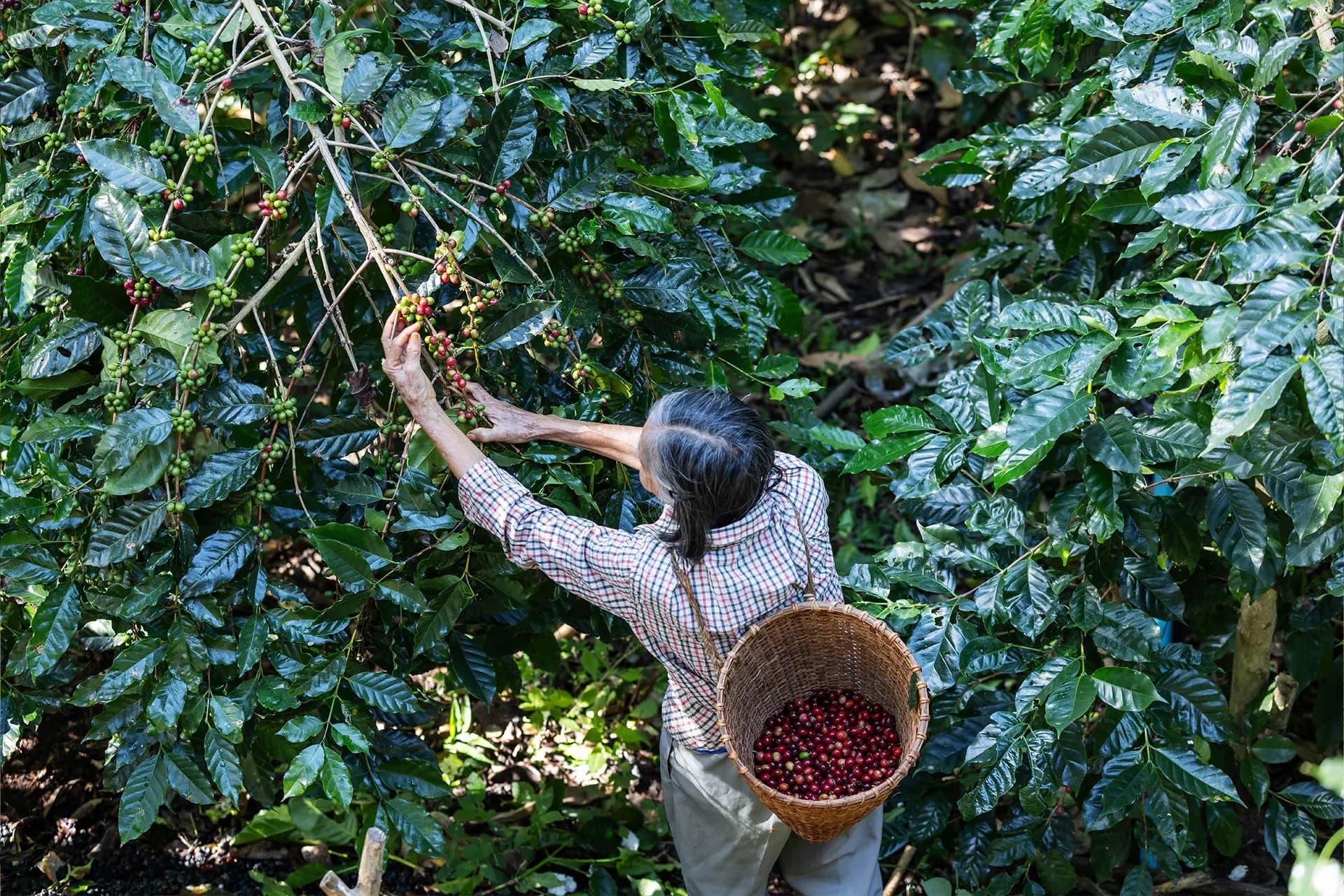
The cherry is picked by hand, one by one
On a coffee plant, the cherries on the same branch do not ripen at the same time. A machine takes everything: ripe, green and overripe together. In Costa Rica the picking is done by hand and selectively, which means the picker chooses only the red ones and comes back to the same plant several times through the season. It is slower and it costs more, and it is the single biggest reason the cup is clean.
The cajuela: how the work is measured
Pickers are paid by the cajuela, a wooden box that has been the country's traditional measure for generations. It is a volume, not a weight, and it is what turns a day in the field into a number. Around it there is a whole vocabulary and a way of working that has been passed down within families.
A season, not a date
The harvest does not happen on one day. It moves through the country following altitude and rain, roughly from the end of one year into the first months of the next, and each region has its own window. Higher farms ripen later. That is why a farm cannot simply hire everyone for one week: the work stretches out and demands people who know what they are looking at.
The year does not stop when the harvest ends
Between harvests come the tasks nobody sees in a photograph: pruning so the plant develops and the fruit ripens evenly, managing the shade trees, weeding, fertilising and watching for disease. Coffee leaf rust alone can wipe out a season if it is caught late. The quality of a harvest is decided in the eleven months before it.
The mill: the same day, or it is lost
Picked cherry has hours, not days. It goes to the mill the same day, where it is separated by density in water, and then the decision is made: remove the fruit and wash it, leave part of it on for a honey, or dry the whole cherry for a natural. From there it goes to the drying patio or the mechanical dryer, turned regularly so it dries evenly. A mistake here cannot be fixed by any roaster.
A country that decided to bet on quality
Costa Rica is small and it is never going to win on volume. Its coffee sector organised itself around the opposite bet: arabica, altitude and careful processing, with a national institute that regulates the trade and defines the growing regions. That is why the region printed on a bag here actually means something.