
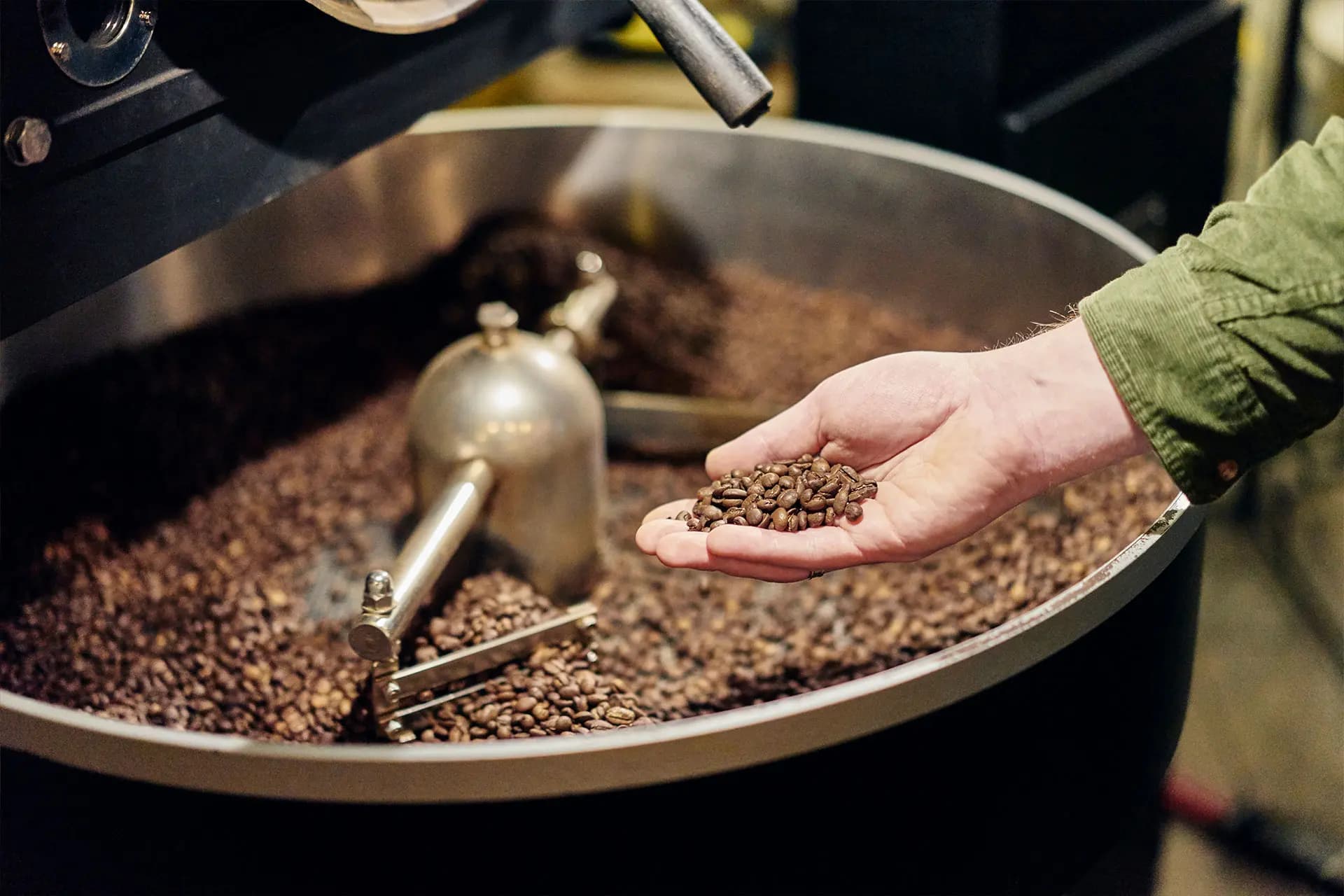
Quality you can feel in every bean
Quality in coffee is not one step, it is a chain of decisions where any single link can undo all the others. This is what that chain looks like.
Quality is subtraction, not addition
Nothing can be added to a coffee to make it better. Everything that happens from the plant onward can only preserve what the bean already has, or ruin it. That is why quality control is mostly about removing what does not belong: unripe cherries, broken beans, anything that dried badly.
One bad bean is enough
A single defective bean can mark a whole cup. An unripe one brings astringency, a fermented one brings a sour note that does not go away, and one bean bored by the coffee borer beetle brings a dirty taste. That is why coffee is sorted several times, and why the last pass is often done by hand on a table.
Sorted by density, size and colour
A denser bean grew more slowly and holds more sugars, so density is the first filter. Then comes size, which matters because beans of different sizes roast at different speeds, and mixing them means some are underdone while others are burnt. Colour sorting catches what the eye would miss.
Cupping: the test that decides
Cupping is the standard way of tasting coffee: same grind, same water, same ratio, coffees side by side and scored blind on aroma, acidity, body, flavour and aftertaste. It is what turns an opinion into a number, and it is the only way to compare one lot against another fairly. It is also where a defect that survived every machine finally shows up.
The roast is a profile, not a colour
Roasting is not about how dark the bean ends up. It is about the curve: how fast the heat goes in, when the first crack happens, how long the development lasts afterwards. The same green coffee under two different curves gives two different cups. Small batches exist for this reason, because they are the only way to keep the curve under control.
And then there is time
Roasted coffee is at its best in the weeks after roasting, not the months. It loses aroma from the moment it leaves the drum, and it loses it much faster once it is ground, because grinding multiplies the surface exposed to air. Nothing you do at home matters as much as grinding right before you brew.
What the cupping table found in ours
These are the flavour notes recorded for each of our coffees.