Why coffee tastes different
Two bags of coffee can come from the same country, the same variety and the same harvest, and still taste nothing alike. What follows is what actually explains the difference, and how each factor shows up in our own coffees.
Altitude: the slower the ripening, the sweeter the bean
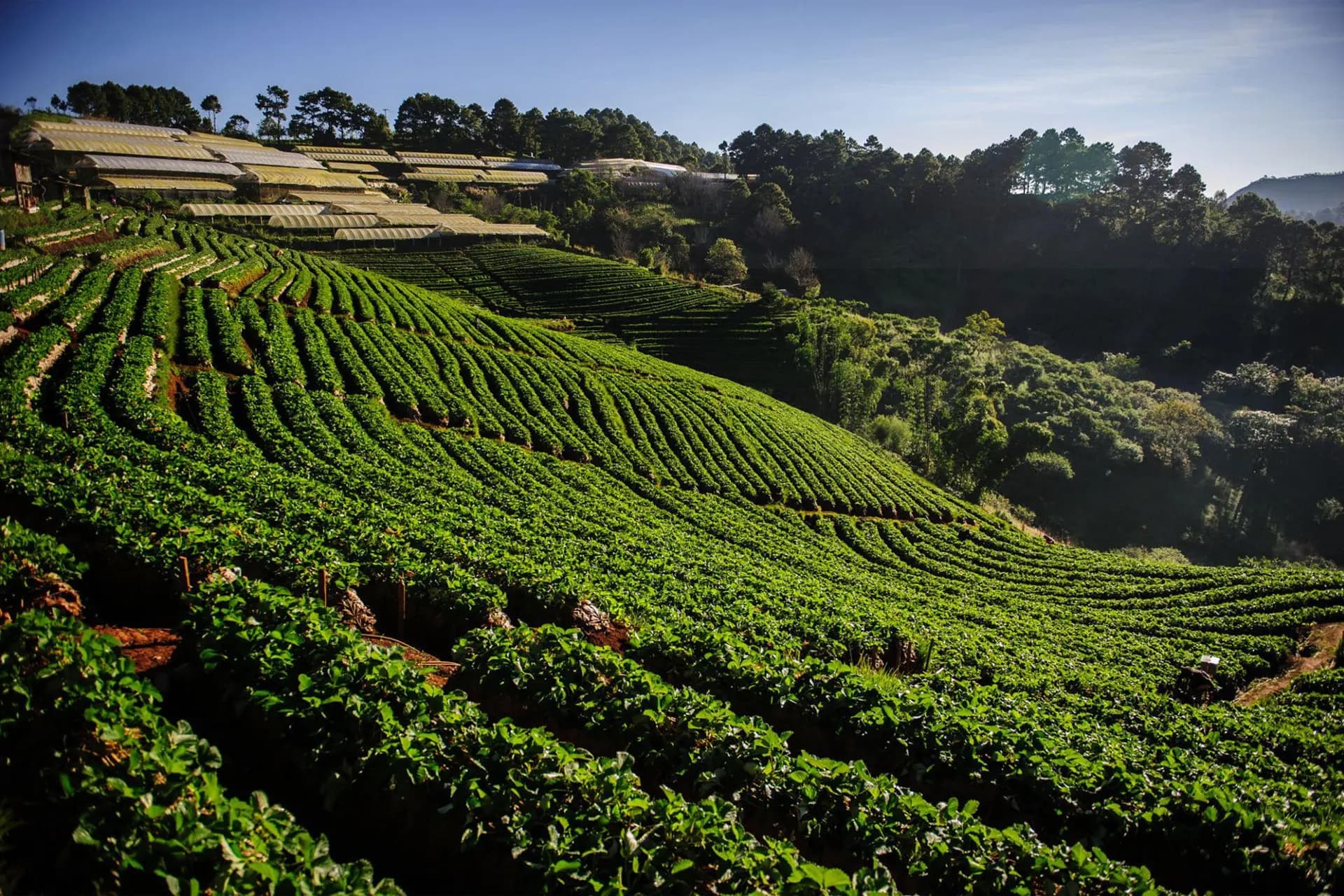
Higher up it is colder, and the coffee cherry takes longer to ripen. That slower ripening lets the bean build up more sugars and more acids, which is what you taste later as brightness and sweetness. It is why a coffee grown above 1,200 metres usually has more character than one from the lowlands. Our farm sits at 1,700 metres.
Volcanic soil: what the plant has to work with
Costa Rica sits on a volcanic spine, and that soil is deep, porous and rich in minerals. It drains well, which the coffee plant needs, and it feeds the fruit that surrounds the bean. A thicker, sweeter fruit leaves its mark on the seed inside.
Climate and shade: rhythm, not just weather
A marked dry season concentrates the harvest and evens out ripening. Shade trees soften the midday sun and hold moisture in the soil, which again slows things down. Same variety, same altitude, different shade: different cup.
The variety: the plant's own signature
Typica, Bourbon, Caturra, Catuaí and the rest each carry their own aromatic profile, the same way grape varieties do in wine. Peaberry is a case apart: it is not a variety but a cherry that produced a single round bean instead of two flat ones, and it tends to concentrate more flavour.
The process: where two identical beans separate
This is the step that changes the most. In the washed process the fruit is removed before drying, giving a clean, bright cup. In the natural process the whole cherry dries in the sun, and the sugars in the pulp seep into the bean, giving sweetness and fruit. Honey sits in between: some of the fruit stays on. Same farm, same harvest, three different coffees.
The roast: the last decision
A light roast keeps the acidity and the aromas the bean brought from the farm. A dark roast develops body and chocolate notes, and covers up part of the origin. Neither is better: they are different readings of the same bean.
The eight coffee regions of Costa Rica
Each region has its own altitude range, its own rainfall pattern and its own harvest window. That is why the region on the bag tells you something real.
| Region | Altitude |
|---|---|
| Tarrazú | 1.200 – 1.900 m.s.n.m |
| Valle Central | 900 – 1.600 m.s.n.m |
| Valle Occidental | 700 – 1.600 m.s.n.m |
| Tres Ríos | 1.200 – 1.650 m.s.n.m |
| Orosi | 900 – 1.400 m.s.n.m |
| Brunca | 600 – 1.700 m.s.n.m |
| Turrialba | 500 – 1.400 m.s.n.m |
| Guanacaste | 600 – 1.300 m.s.n.m |
How it shows up in our coffees
All of these come from the same farm at 1,700 metres. What separates them is the process and the roast.
| Coffee | Roast | Aroma | Acidity | Body |
|---|---|---|---|---|
| House Blend | Medium | Intenso | Brillante | Medio y cremoso |
| Honey | Medium | Intense | Marked | Medium |
| Natural | Medium | Intense | Marked | Medium |
| Peaberry | Light | Intense | Marked | Medium |
| Deleite | Light | Lemon | Citrus | Light -Soft |
| Europeo | Dark | Sweet and sour | Soft | Creamy and silky |
| Sunrise | Medium | Juicy | Soft | Balanced |